Books
-
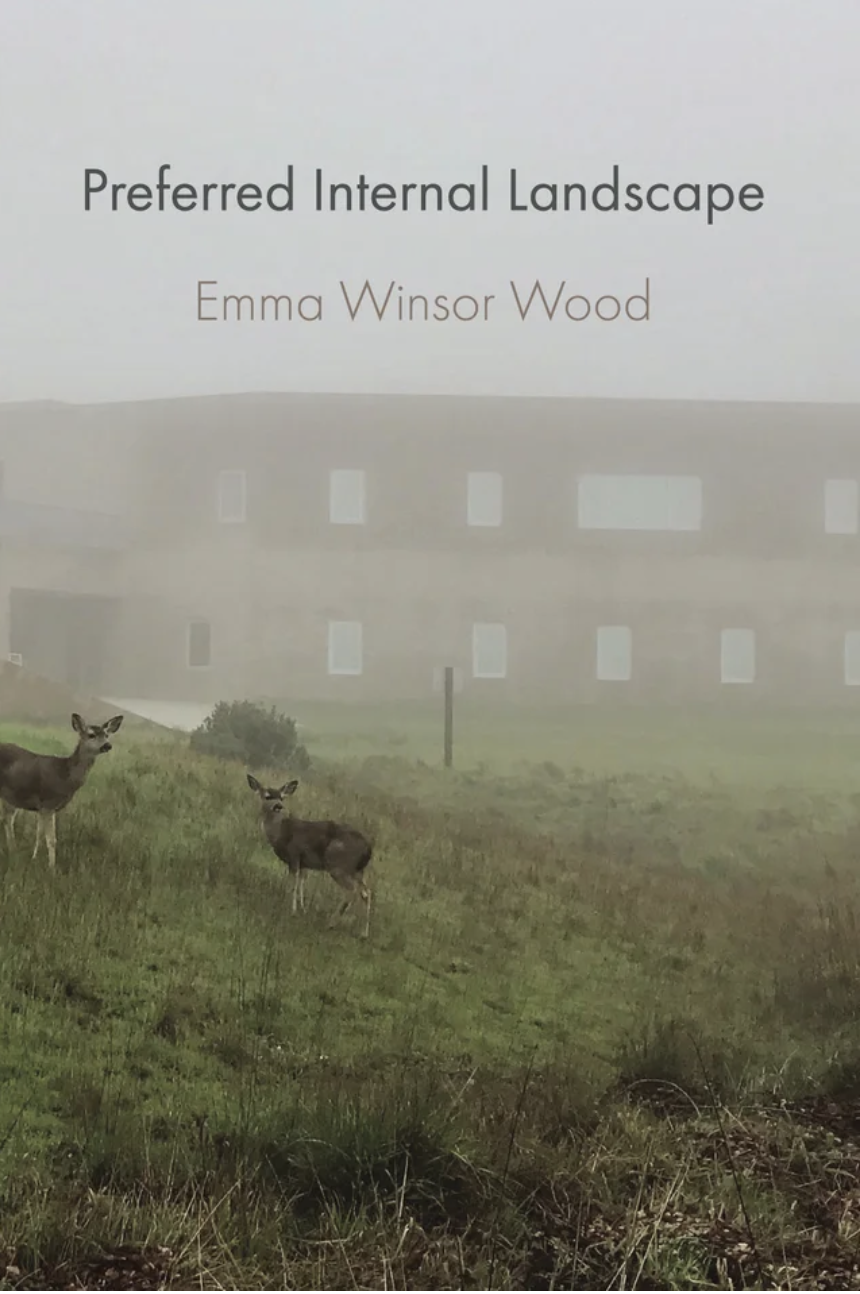
In Emma Winsor Wood's taut, luminous poems, understanding remains elusive, always just out of reach. In place of wisdom, she gathers facts—assembling a collection of true things that do not quite form truth. Here, structure is unreliable: a bear nests in a man's bedroom, birds mimic the sound of obsolete technology, a cemetery becomes a park, a prison, a church. In a world dictated by algorithms, scripts, and the volatile California weather, Preferred Internal Landscape asks what remains when systems fail-when the power goes out, when syntax collapses, when visibility gives way to fog. These are poems as controlled burn, smoldering with everything they refuse to say.
“Form as desire, life as content: These elegant documentary poems confess the universal, work at the edges of everyday problems (fog vs. mist, a house without power), and end by denying finality, which is probably the way all things really end. Subtle and startling, Preferred Internal Landscape enacts the slight perspective shift that changes everything, the poet-thought.”
—Elisa Gabbert, author of Any Person Is the Only Self
-
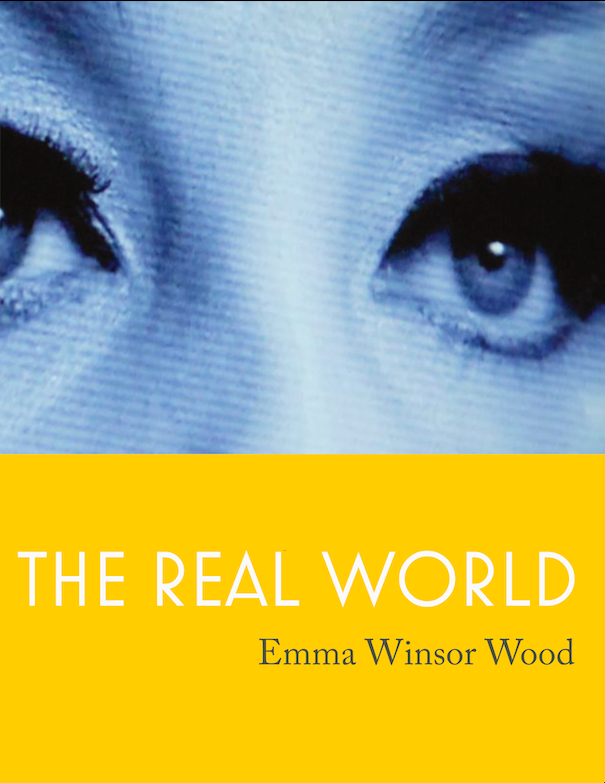
THE REAL WORLD enacts the schizophrenic nature of late capitalism through dizzying tonal slippages—the same poem can move from ironic to mournful to panicked to deadly earnest to funny and back. Inspired by TV shows and generated partly through mechanized Dada methods, THE REAL WORLD circles the emptiness felt in a world in which even the emotions we feel have been invented by the media, a world in which there is an economy of everything—even of feeling. Moving through the surreal landscape of pop culture, the poems are unable settle on a single object or position. They are polyvocal, confused, strange. There is no stable speaker, no core self. All the rooms are sets—with one wall open and symbolic sinks that don’t actually work. As Wood writes:
Hell isn’t other people.
Hell is this personal
algorithm,
the devil a sexy nihilist
bandit everyone wants.
Praise
Anyone who in recent years has been paying attention to what’s going on in the public sphere, the media, and even in one’s private life will perceive in the title of Emma Winsor Wood’s brilliant book The Real World a curl of irony. That is certainly present—and for good reason. The main instrument at work in what one might call the perpetual modernization of the cultural environment is reality production, the generation of commodities and simulacra and the fostering of a taste, and even a desire, for them. Emma Winsor Wood has made herself literate in the vernacular of this “real world,” watching its ongoing commodity melodramas, witnessing the dramatic unwinding and rewinding of streamed realities. And she has done so while conducting a wry and surprisingly happy flirtation with cynicism. That happiness is fostered by Wood’s sense of the absurd as in many ways glorious, as for example in the magnificent final work in the book, “Westworld,” a foray into a landscape of triumphant pathos and ridiculous sublimity. The hilarity may be worth the trip. Most of us don’t know how to deal with the reality of the unrealities in which we find ourselves living. Wood shows us one way to do so—and it’s a great one, one in which we can be real.
— Lyn Hejinian
Presently, we find ourselves in a frantic cinema of climates and hasty accommodations, of what Wallace Stevens once described as "chaos in motion and not in motion." And necessary to our survival, it would seem, is a frantic commerce between miracle and kitsch. In The Real World, Emma Wood shows herself to be the true cineaste of this commerce. The poems here are scripted to menace and tenderness, design and desire. As unimaginable as the future is, I believe that Wood has imagined it. This is visionary writing.
— Donald Revell
-
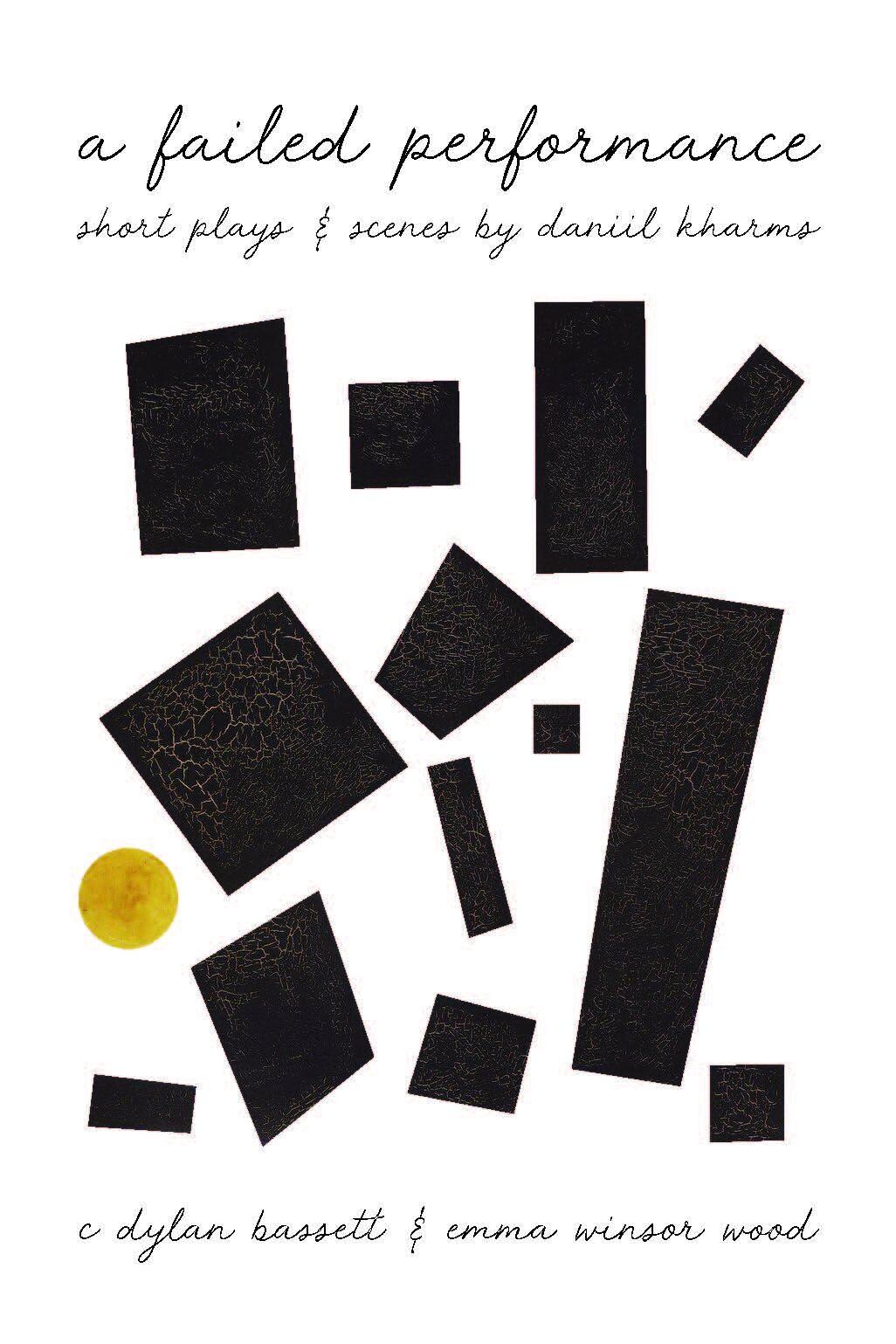
People disappear without explanation. The government takes hostages. War and death occur without reason or meaning. The cycle of poverty and deprivation proliferates. A FAILED PERFORMANCE, translated by C Dylan Bassett and Emma Winsor Wood, is a collection of bizarre and darkly humorous plays and scenes from the Russian avant-garde writer Daniil Kharms. This collection--the first volume in English dedicated entirely to Kharms's dramatic works--includes his major stage plays Elizaveta Bam and Lapa as well as lesser-known sketches and hybrid poem-plays, most of which were never published or performed during his lifetime.
Praise
“Kharms's writing for me is like molecules that combine and re-combust an expected time creating another world. That is on one hand real and on the other unreal. It is its duality that gives his brilliant text power.- Robert Wilson, award-winning directorReading Kharms relieves us of the burden of making sense of the senseless. I lose my head reading these plays, but for this exact world, I'm better off without it. Maybe there'll never be a time not to read Kharms, but now is not one of those times.”
- Zachary Schomburg, poet & translator
“It's hard to read these rescued short plays and scenes by Kharms and not think of his vulnerability as a writer living under Stalin and the irrational state. The date of each piece tells us the time running out on his destiny. He is brave; every mention of food is heartbreaking; you hope he was consoled by the sheer act of writing, by continuing to create for as long as he could. Russian culture and literary history thank the friend who saved his papers.”
- Darryl Pinckney, playwright & Kharms adapter
“Kharms, like many humorists and poets, benefits from the constant renewal, and the forthcoming A Failed Performance (Plays Inverse), a free-wheeling translation by poets C Dylan Bassett and Emma Winsor Wood, with its focus on sounds, rhythms and wordplay, is the richest and funniest to date.”
- Kris Bartkus, review in 3:AM Magazine